Pigtail & Patch Cord
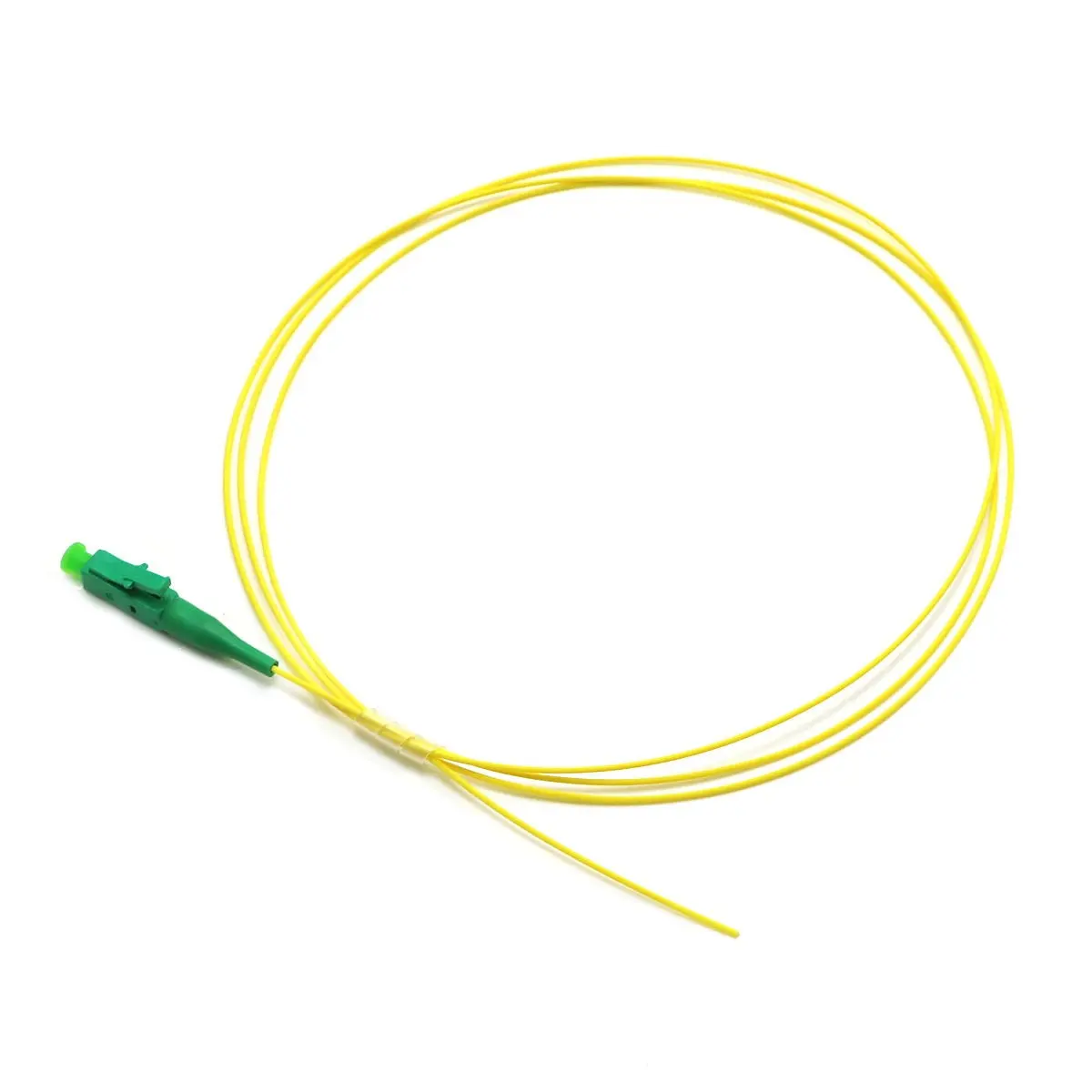
Pigtail & Patch Cord
Overview The first thing to settle on this page is which of the two assemblies is being discussed, because in the market the two names are used loosely and they are not interchangeable. A pigtail is a single fibre with a connector on one end and bare fibre on the other. It is spliced onto the cable, and its purpose is to turn a cable into a connector — the joint is made inside a box, and what comes out of the box is something that can be plugged in. A patch cord has a connector on both ends. Nothing is spliced; it plugs into something at each end. It is the assembly that joins two pieces of equipment that have already been terminated, and it is expected to be removed and replaced during the life of the network. The consequence of confusing them is practical. Order a patch cord for a job that needs a pigtail and you are splicing into a connector you have already paid to fit; order a pigtail for a job that needs a patch cord and you have nothing to plug in. Most of the questions this page receives are really this one question, so it is answered first. Both assemblies come down to the same thing in the end: a fibre, a ferrule, and the quality of the contact between them. The connector is where an optical network is most likely to lose signal or to reflect it back, so the connector — not the cable — is what the specification is really about.
Product Description
Key Features
Pigtails for splicing the cable out to a connector
Patch cords for plug-in connections between terminated equipment
Simplex and duplex assemblies
Pre-terminated drop assemblies, terminated at the factory
Bend-tolerant fibre, suited to the tight routes of subscriber installations
Connector families covering the common FTTH interfaces
Polish options to suit the network, including the angled contact used in PON
Assemblies tested before they leave the factory
Specification
|
Conector |
FC, SC, LC, ST, MU, E2000, LSZH... |
|
|
|
|
Fiber model |
SM |
G652D, G657A1, G657A2 |
|
|
|
MM |
OM1, OM2, OM3, OM4, OM5 |
|
|
|
|
Cable Dia |
Ø0.9mm, Ø2.0mm, Ø3.0mm |
|
|
|
|
Strength Member |
China aramid yarn, Dupont kelvar yarn |
|
|
|
|
Jacket |
PVC, LSZH, OFNR, PE, TPU |
|
|
|
|
Core number |
Simplex, Duplex, Multicore |
|
|
|
|
Length |
1, 2, 3, 5, 10m...or customized |
|||
Where It Is Used
Splicing a drop cable out to a pluggable connector, inside a terminal box
Connecting the subscriber’s equipment to the terminal box or wall outlet
Connecting ports within a patching frame or optical distribution frame
Factory-terminated drop assemblies, where field splicing time is the constraint
Test and measurement access points along a route
Where This Fits in the Route
A pigtail is what the drop cable becomes at the subscriber end. Flat Drop Cable carries the fibre into the building; the pigtail is spliced onto it so that the cable can be plugged in, and the joint is protected in a terminal box. From that box, a patch cord is what reaches the subscriber’s equipment.
See the whole route set out stage by stage on the Outside Plant (OSP) — Duct & Pathway Systems page (/applications/outside-plant/).
Related pages on this leg: Flat Drop Cable, the cable being terminated; Drop Cable Clamps & Hooks, which fix it to the building; and Boxes, Splitters & Closures, where the pigtail is spliced and protected.