Stainless Steel Cable Pulling Grips
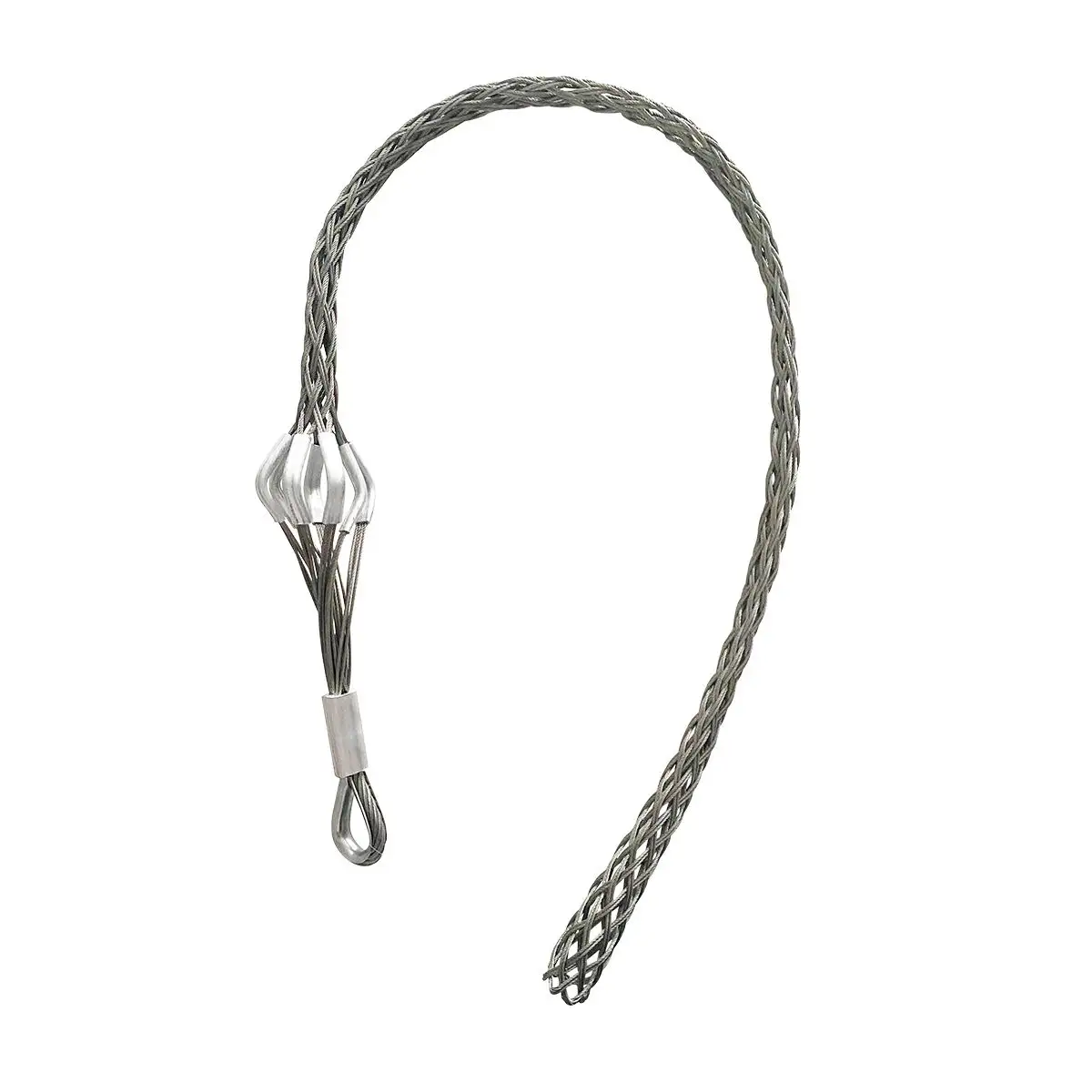
Stainless Steel Cable Pulling Grips
Overview A pulling grip is a woven steel mesh sleeve that goes over the end of the cable and connects it to the pull line. It is the part that actually holds the cable during a pull, and it works without clamps, bolts or a cable lug — the mesh tightens onto the jacket as the load comes on, and grips harder the harder it is pulled. That is the whole point of the design. There is nothing to torque up and nothing to damage the jacket or the conductor: the load is spread across the length of the mesh rather than concentrated at one point. The thin, flexible profile also passes through ducts and bends that a rigid pulling head cannot. Ours are woven from stainless steel. Corrosion resistance runs through the whole wire, so there is no coating to wear off — which matters on a tool whose working life is defined by abrasion. A coated mesh that has rubbed through its coating is a mesh that has started to rust, whether it is stored wet, used in a duct full of groundwater, or left in a marine atmosphere. Grips are reusable tools, sized to the cable’s outside diameter rather than to a nominal trade size, and supplied across the full range from small fibre drops to large power cable.
Product Description
Key Features
Woven stainless steel mesh — corrosion resistance is through the wire, not a coating on it
Grips tighter as the pulling load increases
Load spread along the whole mesh, not concentrated at a single point
Single weave for light pulls; multiweave for added holding power
Flexible eye, or rotating eye where torque builds during the pull
Closed mesh for a free cable end; split mesh for mid-span and retrofit work
Slim, flexible profile that follows the pulling path through ducts and bends
Supplied across the full range, from small fibre drops to large power cable
Reusable — inspect before each use
Technical Specifications
|
Cable grip model |
Suitable for cable diameter |
Steel wire rop |
Total length |
Weight |
Aluminum buckle |
|
SS-10-16D |
10-16mm |
2mm*3wires |
0.5m |
0.4kg |
1pc |
|
SS16-20D |
16-20mm |
2mm*3wires |
0.5m |
0.5kg |
1pc |
|
SS10-16 |
20-30mm |
2mm*3wires |
0.9m |
0.6kg |
1pc |
|
SS 25-50 |
37-50mm |
2mm*3wires |
1.3m |
0.79kg |
1 pc |
|
SS70-95 |
50-60mm |
2mm*3wires |
1.5m |
0.98kg |
1 pc |
|
SS120-150 |
60-80mm |
2.5mm*3wires |
1.8m |
1.3kg |
1 pc |
|
SS185-240 |
80-100mm |
2.5mm*3wires |
2.3m |
2.0kg |
2 pcs |
|
SS300-400 |
100-120mm |
2.5mm*3wires |
2.8m |
3.0kg |
2 pcs |
|
SS500-600 |
120-140mm |
3.0mm*2wires |
3.1m |
4.0kg |
2 pcs |
How to Select
Determine the cable outside diameter. The grip is sized to a cable diameter range — this is the first figure, not the pull tension.
Choose single or multiweave. Multiweave mesh adds holding power for heavier pulls.
Choose closed or split mesh. A closed mesh assembles over the cable end; if no cable end is available, specify a split mesh.
Choose the eye style. A flexible eye is standard; specify a rotating eye where torque builds during the pull.
Estimate the pulling tension and compare it with the grip’s approximate breaking strength — allowing the recommended safety factor. Never work at the rated breaking strength.
Check the environment. Where the grip will be used in groundwater, a wet duct or a marine atmosphere, specify the stainless steel mesh rather than a coated one.
Safety and Handling
Always fit two bands, at 1″ and 2″ from the tail end of the mesh. Accidental release happens when something presses against the tail end and expands the weave — the bands are what prevent it.
Attach pulling hardware to the pulling eye only. Nothing should be attached to the mesh itself.
Inspect the grip before every use. A damaged, worn or corroded grip must not be used.
Breaking strength figures apply to new, unused grips. A grip that has been used is not the same tool.
Never alter a grip — eyes, shoulders, fittings or lugs. Do not use a pulling grip for anything other than pulling cable.
Frequently Asked Questions
How is a pulling grip sized?
By the cable’s outside diameter. Each grip covers a specific range of cable diameters, so you measure the cable first and pick the grip whose range covers it. Strength is checked separately, against the tension the pull will develop.
Why stainless steel rather than galvanised?
Because a grip is an abrasion tool. A galvanised mesh wears through its coating where it rubs, and from that point the steel underneath starts to rust — so the working life of a coated grip is partly the life of its coating. Stainless steel resists corrosion through the full thickness of the wire, which is what makes it the better choice for wet ducts, groundwater and marine or coastal sites.
Closed mesh or split mesh?
A closed mesh slides over the end of the cable, so it needs a free cable end. Where the end is not available — mid-span work, or a cable already installed — a split mesh opens along its length and is closed around the cable instead.
Can the same grip be used on cable and on rope?
Mesh grips are used on electrical cable, bare conductor and rope. Confirm the jacket type and surface with us, because holding performance depends on the surface being gripped.