
Key 5G Infrastructure Parameters at a Glance
The rollout of fifth-generation wireless networks represents one of the most significant infrastructure challenges the telecommunications industry has ever faced. Unlike previous generations, 5G is not simply an upgrade to existing hardware — it demands a fundamentally rethought network architecture built on a foundation of fiber optic connectivity.
| Parameter | 5G Target | 4G LTE Baseline |
|---|---|---|
| Peak Data Rate | 20 Gbps downlink | 1 Gbps downlink |
| Latency | <1 ms (URLLC) | 10–30 ms |
| Connection Density | 1 million devices/km² | 100,000 devices/km² |
| Energy Efficiency | 10× improvement | Baseline |
| Network Availability | 99.999% | 99.9% |
These parameters set the stage for understanding why fiber optic networks are not optional but essential to 5G success. Every cell site, every edge node, and every data center in the 5G ecosystem must be interconnected with high-capacity, low-latency fiber links.
5G Performance Demands and Their Fiber Implications
The three primary 5G use case categories — Enhanced Mobile Broadband (eMBB), Ultra-Reliable Low-Latency Communications (URLLC), and Massive Machine-Type Communications (mMTC) — each place distinct demands on the underlying fiber infrastructure.
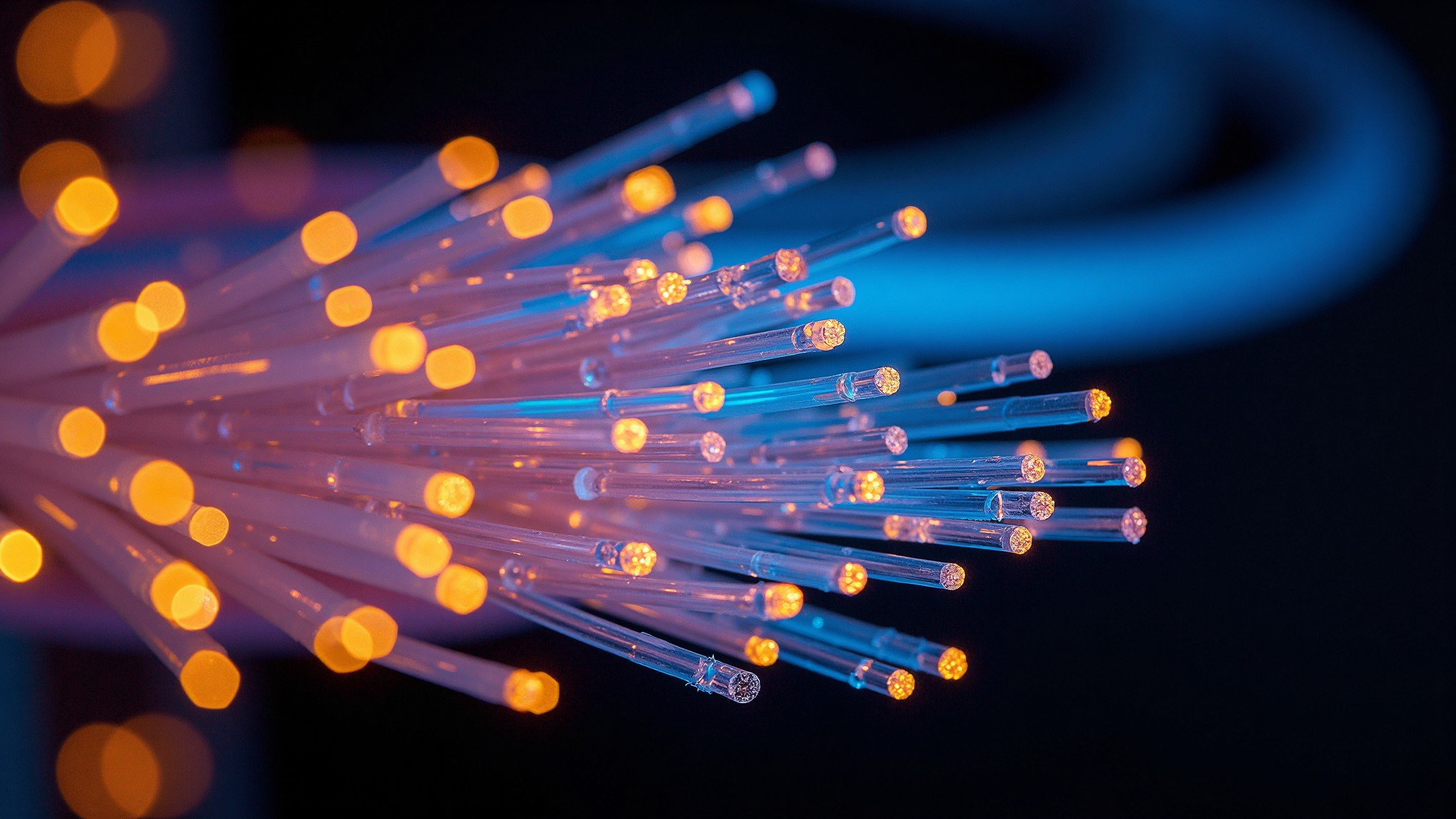
eMBB applications such as augmented reality, 4K/8K video streaming, and fixed wireless access require sustained multi-gigabit throughput. This translates directly into requirements for dense wavelength-division multiplexing (DWDM) on metro and long-haul fiber routes, as well as upgraded last-mile fiber-to-the-premises deployments.
URLLC use cases — autonomous vehicles, remote surgery, industrial automation — demand not just speed but deterministic latency. Fiber optic links provide the predictable propagation characteristics that wireless hops alone cannot guarantee. Network designers are increasingly positioning fiber-fed edge compute nodes within 10 kilometers of end users to meet the sub-millisecond latency envelope.
Backhaul and Fronthaul Architecture
Traditional cellular architectures relied on a relatively small number of macro cell towers connected to centralized baseband units. 5G's shift toward a dense heterogeneous network (HetNet) model — combining macro cells, small cells, and indoor distributed antenna systems — multiplies the number of fiber connection points by an order of magnitude.
Mid-Haul and Fronthaul Split
The functional split between the Central Unit (CU), Distributed Unit (DU), and Radio Unit (RU) in Open RAN architectures creates new fiber requirements at each segment:
- Fronthaul (RU to DU): Requires eCPRI-compliant links with sub-100 μs latency and symmetrical bandwidth of 25 Gbps or higher per sector. This is the most fiber-intensive segment.
- Mid-Haul (DU to CU): Aggregates traffic from multiple DUs, typically requiring 100 Gbps capacity on metro fiber rings.
- Backhaul (CU to Core): Connects to the 5G core network and edge data centers, demanding 400 Gbps or higher on long-haul routes.
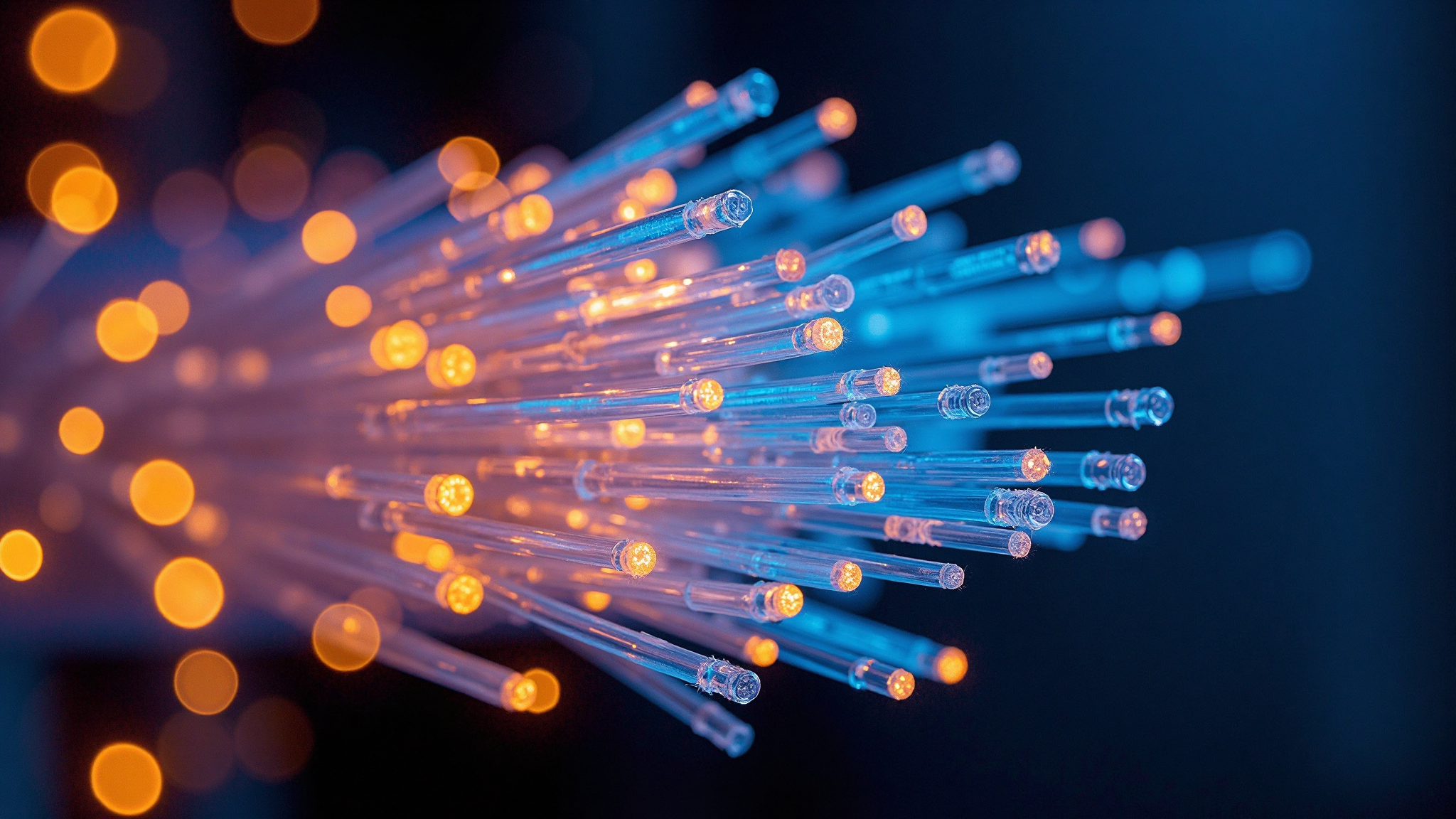
Network operators are responding by accelerating fiber deployment programs, particularly in suburban and industrial areas where small-cell density will be highest. Municipal broadband initiatives and public-private partnerships are playing an increasingly important role in closing the fiber gap.
Network Slicing and Flexibility
One of 5G's most powerful features is network slicing — the ability to partition a single physical network into multiple virtual networks, each optimized for a specific service class. While slicing is primarily a software-defined capability, its effectiveness depends entirely on the underlying fiber topology.
Network slicing without sufficient fiber depth is like building express lanes on a two-lane highway — the software can manage traffic priorities, but the physical capacity must exist first.
Each slice may have different latency, bandwidth, and reliability requirements. The fiber plant must therefore be dimensioned to handle worst-case aggregate demand across all active slices, with sufficient headroom for dynamic reallocation. This has driven adoption of flexible-grid optical amplifiers and coherent optics that can adapt capacity on demand.
Future-Proofing Investments
For network operators and fiber infrastructure manufacturers, the 5G era represents a long-cycle capital investment. Fiber optic cables have a typical service life of 25 to 30 years, meaning today's deployments must accommodate not just current 5G requirements but the anticipated demands of 6G and beyond.
Key investment considerations include:
- Fiber count provisioning: Deploying 864-strand or higher-count cables in new conduit runs to avoid costly re-entry in the future.
- Hollow-core fiber trials: Emerging hollow-core fiber technology promises latency reductions of up to 30% compared to conventional solid-core fiber, which could be critical for next-generation URLLC applications.
- Subsea and terrestrial route diversity: Ensuring redundant fiber paths to cell sites and edge data centers for the five-nines availability that 5G promises.
The convergence of 5G and fiber optics is not a temporary trend — it is the structural foundation of the next decade of digital infrastructure. Organizations that invest strategically in fiber depth and flexibility today will be best positioned to capture the economic value of 5G's transformative applications tomorrow.